Precision Service
Wheel Alignment
Green Numbers Are Easy. Straight Driving Takes Skill.
More Than Numbers in the Green
Making your vehicle actually drive straight? That takes more.
It takes understanding how the angles interact. It takes patience to get the steering wheel centered while the thrust angle is correct while the toe is set properly. It takes knowing when factory specs aren't quite right for how a vehicle has aged or been used.
We invest in the best equipment and take the time to do alignments properly — not just technically correct, but actually right.
Need new tires too? We can do both in a single visit.
The Equipment Matters
Pinpoint Accuracy
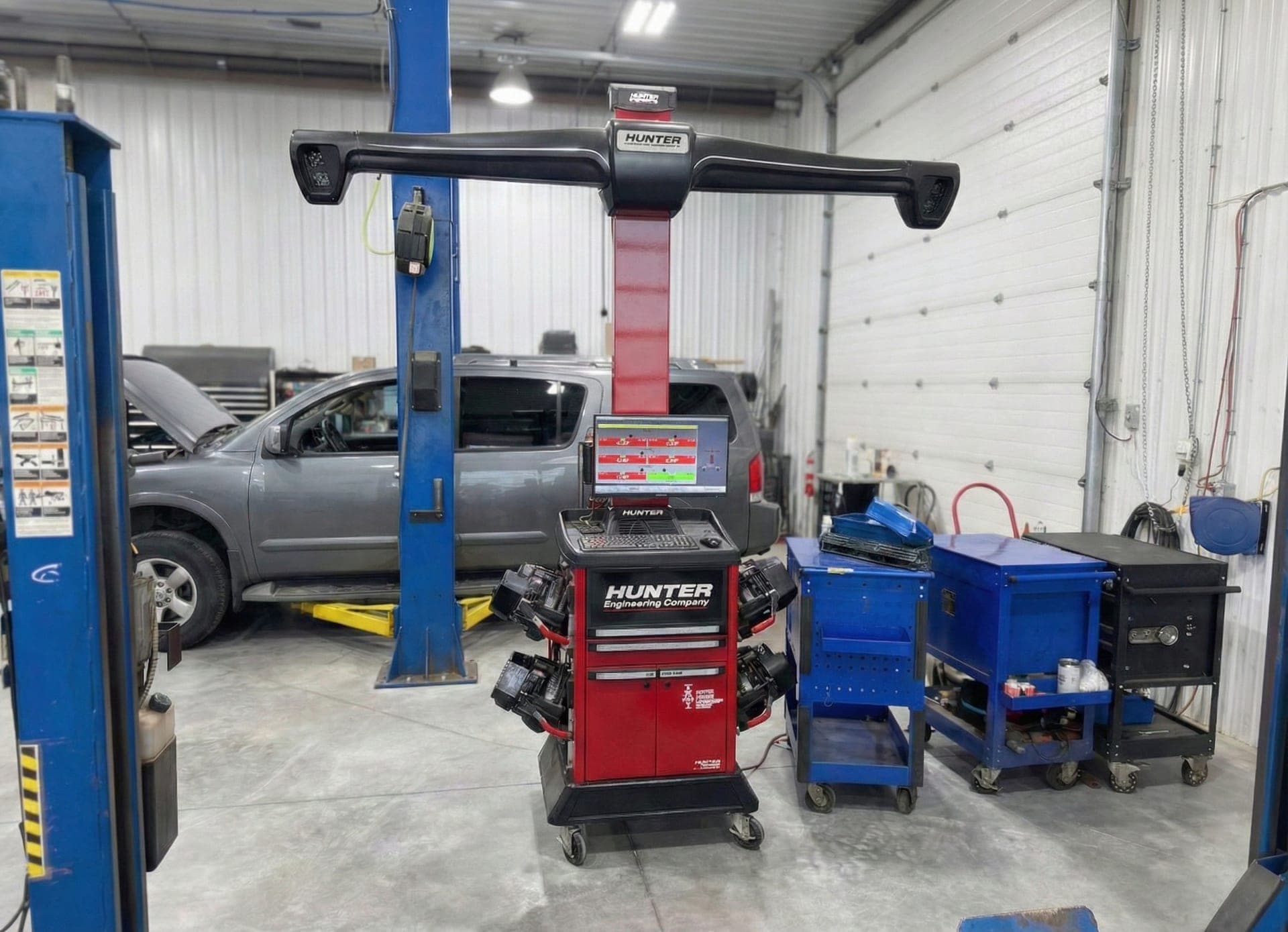
Four high-resolution cameras measure alignment angles with precision that budget equipment can't match. We're adjusting in 0.1-degree increments — small differences that affect how your vehicle tracks and wears tires.
QuickGrip Wheel Adaptors
Hunter's patented adaptors grip the tire, not the rim. No metal-to-metal contact, no risk of scratching your wheels. This matters when you have $3,000 wheels on your truck.
Integrated Diagnostics
Modern vehicles often require steering angle sensor resets after alignment. Our system includes Hunter's ADASLink diagnostic tool, which performs these resets as part of the alignment process.
ADAS Calibration Ready
Many newer vehicles have cameras and sensors that need recalibration after alignment work. Our system is expandable to handle static ADAS calibrations as this technology becomes more common.
It's Not Just About the Numbers
Why?
Because alignment is about how multiple angles work together — camber, caster, toe, thrust angle, and steering axis inclination all interact. Changing one affects the others. Getting them all correct AND getting the vehicle to track straight with a centered steering wheel takes experience and patience.
Our Approach
How we do alignments right
- 1
Test Drive First
We need to know what the vehicle is doing before we measure it
- 2
Full Four-Wheel Measurement
Even if you think it's just the front, we measure everything
- 3
Diagnose Before Adjusting
Sometimes the numbers are off because something is worn or bent, not just out of adjustment
- 4
Adjust With the End Result in Mind
Centred steering wheel, straight tracking, even tire wear
- 5
Test Drive After
We verify it drives correctly, not just that the numbers are green
Sometimes It's More Complicated
A standard alignment assumes everything is adjustable and nothing is damaged. That's not always the case.
Some vehicles have limited or no rear adjustment from the factory. If your rear alignment is off, we may need extra time to access adjustment points or work around factory limitations.
Adjustment bolts can seize from corrosion. Factory retainers sometimes need removal. Alberta roads and winters are hard on this hardware — what should be simple sometimes requires extra work.
Some vehicles didn't come with adjustable alignment points. When alignment is off on these vehicles, we can often install eccentric bolt kits that create adjustability where there wasn't any.
Hit a pothole? Curbed a wheel? It doesn't take much force to bend a control arm, tie rod, or steering knuckle slightly. Sometimes we can adjust around minor bends. Sometimes components need replacement.
When to Come In
Signs your vehicle needs alignment
The most obvious sign — your vehicle wants to go left or right when you let go of the steering wheel.
You're driving straight but the steering wheel isn't centered, or it doesn't return to center after turns.
Inside edge, outside edge, or feathered wear patterns indicate alignment problems destroying your tires.
Vehicle feels unstable at highway speeds or you're constantly making small steering corrections.
When You Should Get an Alignment
With New Tires
Protect your investment — misalignment destroys tires prematurely
After Suspension Work
Any time components are removed and reinstalled
After Impact
Pothole, curb, collision — get it checked
Annually
Especially if you drive rough roads or notice any handling changes
When Tire Wear Looks Uneven
Before it destroys another set
Standard Four-Wheel Alignment
Pre-Alignment Test Drive
We know what it's doing before we measure
Four-Wheel Measurement
Hunter HawkEye Elite precision measurement
Steering & Suspension Inspection
Check for worn or damaged components
Adjustment of All Available Angles
To specification or better
Steering Angle Sensor Reset
If your vehicle is equipped
Post-Alignment Test Drive
Verify it drives correctly
Printed Alignment Report
Before and after measurements
When Additional Work Is Needed
No surprises. Just honest communication about what your vehicle needs.
Frequently Asked Questions
How long does an alignment take?
Typically 45 minutes to an hour. If we encounter seized hardware, need to make rear adjustments, or find other complications, it can take longer.
How much does an alignment cost?
Standard four-wheel alignment pricing is competitive with other shops. If additional work is needed (seized hardware, eccentric kits, etc.), we'll quote that separately before proceeding.
Do I need a four-wheel alignment or just front?
Four-wheel. Even if the front is what's adjustable, we need to measure the rear to set the front correctly. The rear determines the "thrust angle" that the front aligns to. Front-only alignments are a shortcut that can leave you with a crooked steering wheel.
Can you align lifted trucks?
Yes. Lifted vehicles often need alignment after the lift is installed, and may need it more frequently as components settle. Our equipment handles lifted trucks.
My vehicle pulls but the alignment is "in spec" — what's wrong?
Alignment specs have tolerances. A vehicle can be "in spec" but still have a cross-camber or cross-caster difference that causes a pull. Sometimes the spec itself isn't ideal for how the vehicle has aged. We look at the whole picture, not just whether numbers fall within a range.
Do you do ADAS calibration?
Our system is ready for dynamic ADAS calibrations and steering system resets. Static ADAS calibrations (forward-facing cameras) are coming as we expand our capabilities. If your vehicle needs static calibration, we can discuss options.
Related Services
Areas We Serve
Serving Sylvan Lake & Central Alberta
From our shop on Industrial Drive, we're an easy drive for customers across the region:
Ready to Get It Straight?
Whether your vehicle is pulling, your steering wheel is off-center, or you just want to protect your new tires — we'll make it drive right.